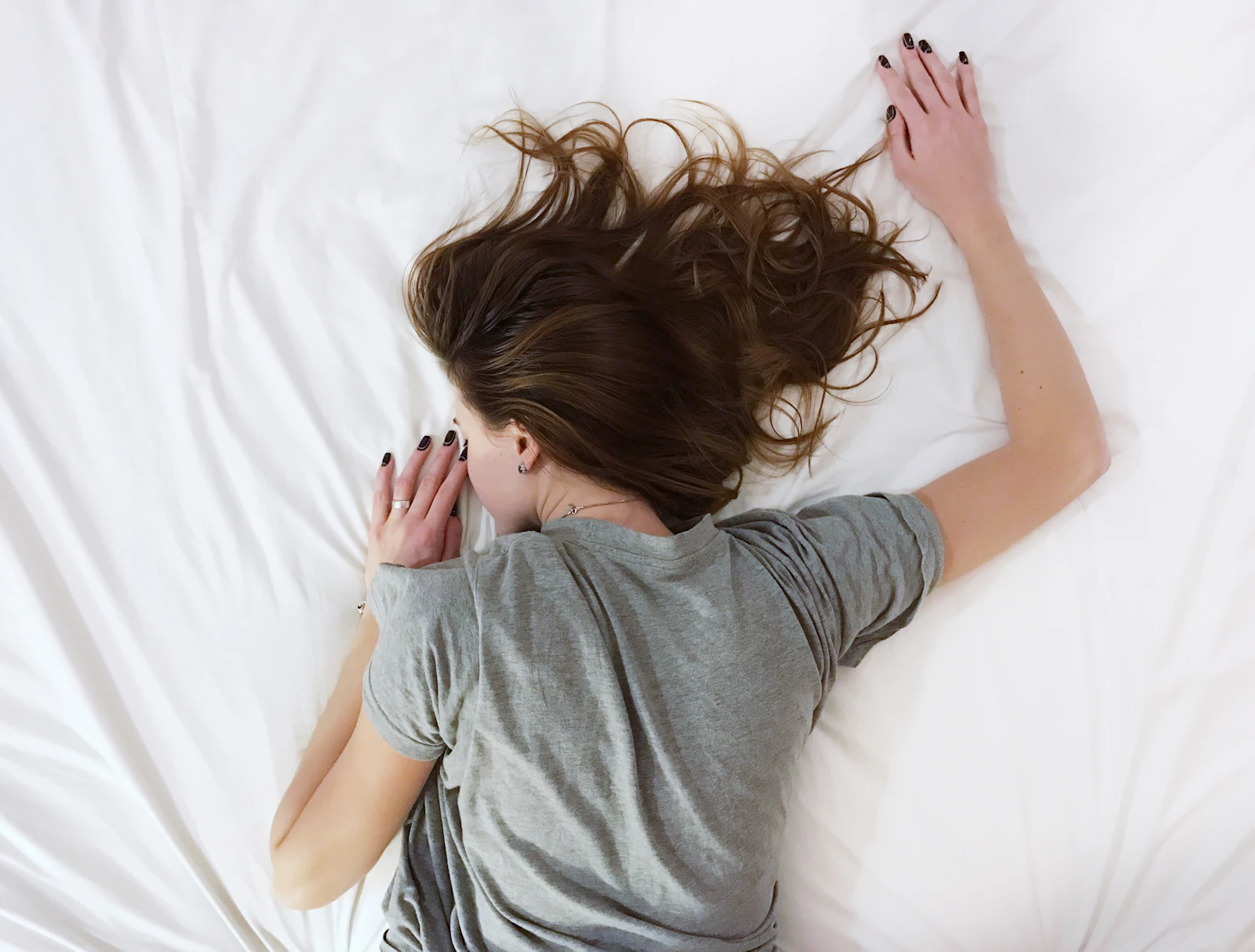
How to Fall Asleep in 5 Minutes — 10 Science-Backed Methods
Struggling to fall asleep? These 10 science-backed techniques can help you fall asleep faster, from military sleep methods to ambient sound therapy.
You’ve been lying in bed for 45 minutes. Your mind won’t stop racing. The clock says 1:23 AM and you have a meeting at 9. Sound familiar?
Difficulty falling asleep — known medically as sleep onset insomnia — affects roughly 30% of adults regularly. The good news: there are proven techniques that can dramatically reduce the time it takes to fall asleep. Here are 10 methods backed by sleep research.
1. The Military Sleep Method
Developed for fighter pilots who needed to fall asleep in combat conditions, this technique reportedly works for 96% of people after 6 weeks of practice.
How to do it:
- Relax every muscle in your face — jaw, tongue, forehead, around your eyes
- Drop your shoulders as low as they’ll go, then relax your arms one at a time
- Breathe out slowly, relaxing your chest
- Relax your legs — thighs first, then calves, then feet
- Clear your mind for 10 seconds. Imagine yourself lying in a canoe on a calm lake, or lying in a black velvet hammock in a dark room
- If thoughts intrude, repeat “don’t think, don’t think” for 10 seconds
Why it works: Systematic muscle relaxation reduces physical tension that you may not even realize you’re holding.
2. The 4-7-8 Breathing Technique
Developed by Dr. Andrew Weil, this breathing pattern acts as a natural tranquilizer for your nervous system.
How to do it:
- Breathe in through your nose for 4 seconds
- Hold your breath for 7 seconds
- Exhale slowly through your mouth for 8 seconds
- Repeat 3-4 cycles
Why it works: The extended exhale activates your parasympathetic nervous system, slowing your heart rate and signaling your body to relax. The counting also occupies your mind, preventing anxious thoughts.
3. Ambient Sound Therapy
Using consistent background sounds — rain, ocean waves, white noise, or nature soundscapes — is one of the most effective and accessible sleep techniques.
How to do it:
- Choose a sound that you find naturally calming (most people prefer rain or ocean)
- Start playing it 15-30 minutes before your target bedtime
- Keep the volume low — just loud enough to mask environmental noise
- Set a timer for 30-60 minutes so it stops after you fall asleep
Why it works: Ambient sounds mask disruptive noises, reduce cognitive rumination, and create a conditioned sleep association over time. A 2021 meta-analysis found that sound therapy reduced sleep onset by an average of 12 minutes. Learn more about how white noise improves sleep quality and why rain sounds are particularly effective.
Try it with DreamTone — 30+ handcrafted soundscapes with a smart sleep timer that fades out gradually.
4. The Cognitive Shuffle
Created by cognitive scientist Luc Beaulieu, this technique disrupts the logical thinking patterns that keep you awake.
How to do it:
- Think of a random word (like “SLEEP”)
- For each letter, visualize random objects that start with that letter
- S → sailboat, sunflower, sandwich, saxophone…
- L → lighthouse, lemon, ladybug, laptop…
- Continue until you drift off
Why it works: Your brain interprets random, non-threatening imagery as a signal that it’s safe to sleep. Logical, problem-solving thoughts keep you alert; random imagery does the opposite.
5. Progressive Muscle Relaxation (PMR)
A clinical technique used in cognitive behavioral therapy for insomnia (CBT-I).
How to do it:
- Starting with your toes, tense each muscle group for 5 seconds
- Release and notice the feeling of relaxation for 10 seconds
- Move upward: feet → calves → thighs → glutes → abdomen → chest → hands → arms → shoulders → face
- After completing the sequence, take 3 deep breaths
Why it works: The tension-release cycle creates a pronounced relaxation effect. Many people hold tension unconsciously; PMR makes you aware of it and then eliminates it.
Pro tip: The most effective approach is combining 2-3 techniques together. We call this a “sleep ritual stack” — see method #10 below.
6. The Temperature Drop Trick
Your body naturally cools by 1-2°F when transitioning to sleep. You can accelerate this process.
How to do it:
- Take a warm shower or bath 60-90 minutes before bed
- Keep your bedroom at 65-68°F (18-20°C)
- Wear socks if your feet get cold (warm extremities help your core cool faster)
Why it works: The warm bath causes vasodilation (blood vessels expand), which rapidly cools your core body temperature afterward. This drop signals your brain to produce melatonin.
7. The Paradoxical Intention
If trying to fall asleep creates anxiety, try the opposite.
How to do it:
- Lie in bed with your eyes open
- Tell yourself: “I’m going to stay awake”
- Gently resist the urge to close your eyes
- Don’t use your phone or read — just lie still with open eyes
Why it works: By removing the pressure to sleep, you eliminate performance anxiety. This is a recognized clinical technique in sleep therapy.
8. The Body Scan
A mindfulness technique adapted for sleep.
How to do it:
- Close your eyes and focus on the top of your head
- Slowly move your attention down through each body part
- At each point, notice any sensations without trying to change them
- Spend 10-15 seconds on each area
- When you reach your toes, start over (most people fall asleep before completing a second round)
Why it works: It anchors your attention to physical sensations, preventing your mind from engaging with stressful thoughts.
9. Limit Blue Light + Screen Time
The foundation of good sleep hygiene.
How to do it:
- Stop using screens 30-60 minutes before bed
- If you must use devices, enable Night Shift / blue light filter
- Replace scrolling with audio — like ambient sounds from DreamTone or an audiobook. Not sure which noise color to use? Check out our complete guide to noise colors
Why it works: Blue light suppresses melatonin production by up to 50%. Even with Night Shift enabled, the cognitive stimulation from social media and news keeps your brain in alert mode.
10. The Sleep Ritual Stack
Combine multiple techniques into a nightly routine:
Example 30-minute routine:
| Time | Activity |
|---|---|
| 10:00 PM | Warm shower |
| 10:15 PM | Dim lights, start DreamTone rain sounds |
| 10:20 PM | 5 minutes of 4-7-8 breathing |
| 10:25 PM | Body scan or progressive muscle relaxation |
| ~10:30 PM | Asleep |
After 2-3 weeks of consistency, your brain will associate this routine with sleep, and you’ll start feeling drowsy as soon as you begin.

What NOT to Do When You Can’t Sleep
Avoid these common mistakes:
- Don’t check the clock — Calculating how many hours of sleep you’ll get creates anxiety
- Don’t stay in bed for more than 20 minutes — If you’re wide awake, get up, do something boring in dim light, and return when sleepy
- Don’t use alcohol — It helps you fall asleep but destroys sleep quality in the second half of the night
- Don’t exercise within 2 hours of bedtime — Raises core body temperature and adrenaline
- Don’t eat heavy meals late — Digestion interferes with your body’s sleep preparation
Start Tonight
You don’t need to try all 10 techniques at once. Pick two or three that resonate with you and use them consistently for a week. Most people see significant improvement within 3-5 nights.
Our recommendation for the easiest starting point: ambient sound therapy (method #3) combined with 4-7-8 breathing (method #2). DreamTone makes the sound part effortless — open the app, pick your sounds, set a timer, and focus on your breathing.
FAQ
Q: Which method works fastest? A: The 4-7-8 breathing technique often works within the first few tries. The military sleep method takes longer to master (up to 6 weeks) but has the highest reported success rate. Ambient sounds work immediately but become more effective with consistent use.
Q: Can I use these techniques for naps too? A: Yes, all of these work for naps. For short naps (20-30 minutes), the military method or 4-7-8 breathing are most efficient since you need to fall asleep quickly.
Q: What if none of these work? A: If you’ve tried multiple techniques consistently for 2+ weeks without improvement, consider consulting a sleep specialist. Chronic insomnia may benefit from clinical CBT-I (Cognitive Behavioral Therapy for Insomnia), which has a 70-80% success rate.
Q: Is it normal to take more than 30 minutes to fall asleep? A: The clinical threshold for sleep onset insomnia is 30+ minutes, 3+ nights per week, for 3+ months. Occasional difficulty is normal. If it’s chronic, these techniques — especially the sleep ritual stack — can make a real difference.
Q: Should I combine ambient sounds with music? A: Generally, pure ambient sounds are better for sleep than music. Music has rhythm and melody that can engage your brain, while ambient sounds provide consistent, non-stimulating background coverage.
Related Articles
The 90-Minute Sleep Cycle: How to Calculate Your Ideal Wake-Up Time
Waking mid-cycle causes grogginess. Learn how sleep cycles work, how to count backwards from your alarm, and how a cycle calculator helps you wake refreshed every morning.
SleepHow to Wake Up Without a Jarring Alarm: Gentle Sound Alarm Alternatives in 2026
Harsh alarms spike cortisol and ruin your mornings. Learn how gentle soundscapes, progressive volume, and timed fade-ins help you wake up naturally — and which apps do it best.
SleepDreamTone Is Live: A Free Sleep Sounds App That Respects Your Wallet and Your Privacy
DreamTone is now on the App Store and Product Hunt — a free, no-subscription sleep sounds app with 30+ soundscapes, smart timer, and zero data collection.

Try DreamTone
Curated ambient sounds and sleep tools to help you fall asleep faster and wake up refreshed.